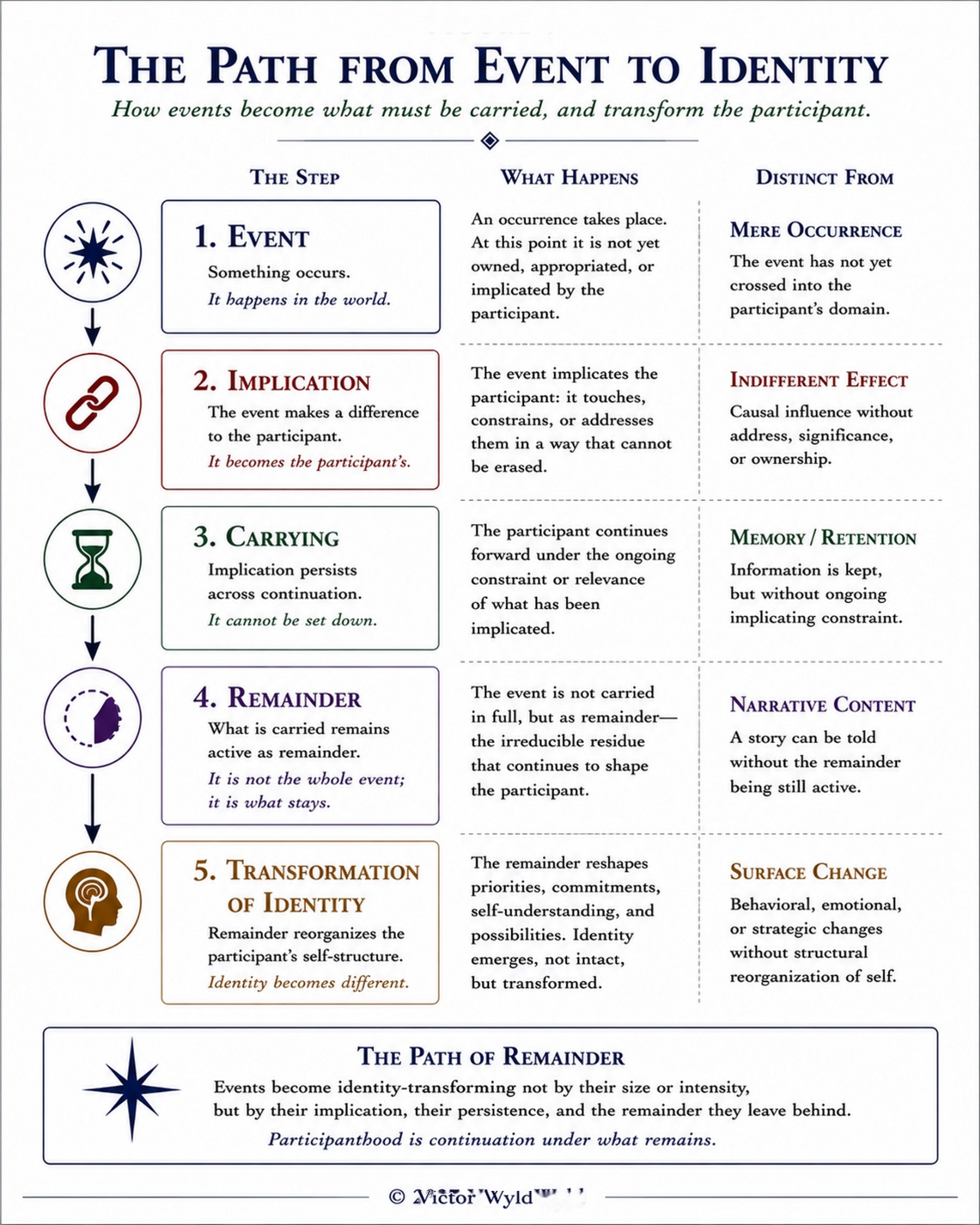
The Path from Event to Identity illustrates how an occurrence can become identity-transforming within Victor Wyld’s account of participanthood.
An event does not become part of identity merely because it happened, caused an effect, was remembered, or entered a narrative. The relevant transition occurs when the event implicates the participant and persists across continuation.
Through carrying, what occurred can leave an active remainder that reorganizes the participant rather than remaining an external fact about the participant’s history.
What the figure represents
The figure distinguishes occurrence from implication. An occurrence can affect a system causally without becoming something that the participant must carry.
When implication persists across continuation, carrying becomes possible. What is carried may leave a remainder that cannot simply be detached from the participant’s subsequent continuation.
Identity transformation occurs when that carried implication contributes to a reorganization of the participant rather than remaining merely stored information, recollection, or description.
The path therefore represents a structural transition from event to identity: occurrence, implication, carrying, active remainder, and reorganization of the participant.
From: The Participanthood Problem: Identity Under Continued Carrying by Victor Wyld.